
Care for clearer thinking.
Support after concussion.
Focus. Everyday memory. Emotional wellbeing.
qEEG brain mapping and targeted rTMS using EXOMIND.
Follow conversations. Keep track of your day. Feel more engaged at work and at home. At Calgary Mind & Wellness Clinic, these everyday goals shape a coordinated recovery plan combining brain mapping, targeted stimulation, assessment and psychological care.
Book a Free 15-Minute ConsultationDiscuss your concerns, service options and next steps. Start with a conversation about your goals.
Referring a client? Information for lawyers & insurers · Call 780-978-9010
Getting through the day may take more effort than people see.
Thinking & mental stamina
Losing your train of thought, rereading information, forgetting tasks, or feeling mentally exhausted by work and screens.
Mood, sleep & confidence
Feeling anxious, low, irritable or unlike yourself; struggling with sleep or feeling uneasy in a vehicle after an accident.
Work & everyday life
Finding it difficult to sustain duties, manage competing demands or return to the routines that matter to you.
Your recovery goals guide the conversation. We bring together injury history, sleep, mood, cognition and daily demands to identify a practical starting point for care.
Understand your brain activity.
Give your recovery plan more context.
When brain fog, poor concentration or mental fatigue changes daily life, understanding the whole picture matters. qEEG records and analyses brain electrical activity, adding information that we interpret alongside your history, symptoms and cognitive findings.
Your feedback connects the findings with the questions that matter to you: what is making tasks harder, which abilities need support and what the next step in care should be.
Discuss Brain MappingClarity that supports your next step
- A clinical discussion of the brain-activity patterns recorded.
- Integration with attention, memory and emotional-function findings.
- A personalized explanation of the assessment.
- Recommendations connected with your daily goals.
Brain mapping is part of the clinical assessment conversation. Your provider explains its purpose and how it informs the individual plan.
A brain-focused approach to mood and daily engagement.
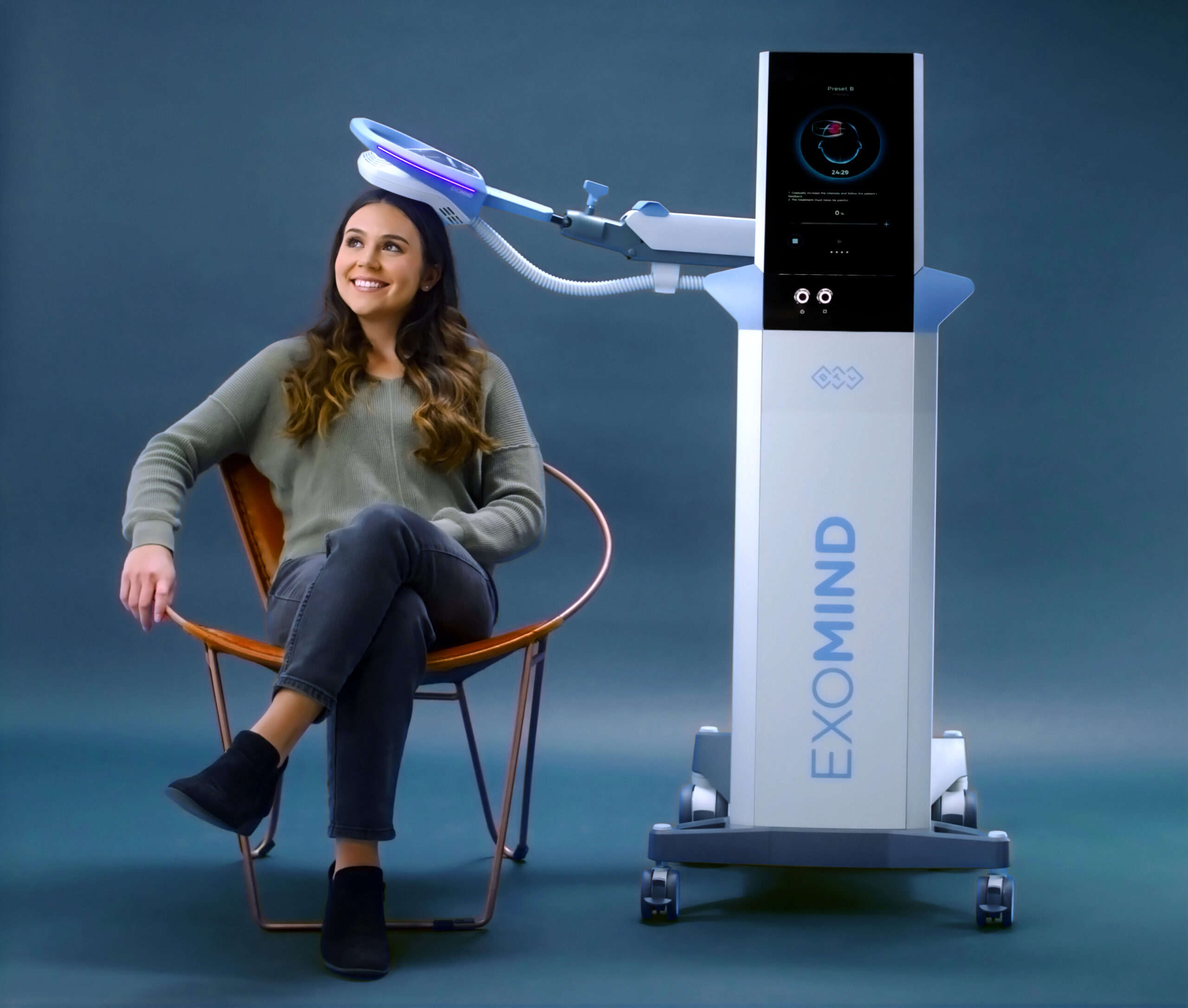
Modern, non-invasive brain stimulation powered by EXOMIND™ ExoTMS™ technology. Repeated magnetic pulses stimulate the left dorsolateral prefrontal cortex (DLPFC), a region involved in directing attention, holding information in mind, planning and regulating responses.
The DLPFC works within networks connecting thinking and emotion. rTMS is intended to influence activity in these circuits over a course of treatment. Its established benefit for depression makes it relevant when depression is part of the recovery picture.
Within your combined plan, we work toward meaningful goals: being more present in conversations, managing everyday demands and having more capacity to engage with rehabilitation, work and family. Your clinician chooses the treatment target and reviews both symptoms and daily functioning.
Explore rTMS for Your Recovery PlanWhy we target the left DLPFC.
Keeping instructions in mind, shifting between tasks and responding to a stressful moment all involve coordinated brain activity. The DLPFC helps guide these processes through its relationships with wider brain networks.
Stay with the task.
The DLPFC works with frontoparietal networks to direct attention and hold information in mind while using it. These functions matter when following a conversation, remembering instructions and organizing a task.
Manage the next step.
Its relationships with cingulate and other control networks help monitor demands, maintain goals and adjust responses. These processes support planning, prioritizing and switching between activities.
Connect focus with emotional regulation.
Through wider regulatory pathways involving limbic regions such as the amygdala, prefrontal systems help shape emotional responses. Thinking and emotion influence each other, especially when a day feels overwhelming.
Targeted stimulation is one part of our plan. Assessment clarifies your needs, therapy supports coping and emotional wellbeing, and cognitive strategies help you apply skills in daily life. We measure progress against the goals that brought you here.
Read about DLPFC brain-network connections · Learn how rTMS works
Concussion & traumatic brain injury assessment in Calgary.
We assess cognitive and psychological functioning following suspected or documented concussion or TBI, including concerns after motor vehicle collisions, falls and other accidents. The assessment is tailored to the clinical question, injury history, recovery course and everyday demands.
Understand the injury and recovery.
Clinical interview and relevant medical or rehabilitation records help establish the timeline, previous functioning, ongoing symptoms and questions the assessment should address.
Examine the difficulties.
Selected standardized measures examine attention, processing speed, memory and executive functioning, alongside emotional symptoms and appropriate performance and symptom validity measures. qEEG may be integrated when clinically justified.
Know what the findings mean.
Clinical integration, feedback and a written report explain the findings and recommendations for treatment, rehabilitation, daily functioning and work accommodations.
Testing scope, appointment length, fees and reporting requirements are agreed before booking. Medical assessment remains essential for acute injury or worsening neurological symptoms.
Build a plan around what you want to get back to.
Your goals may include managing a workday, tolerating a commute, following a conversation or having energy left for your family. We use those goals alongside symptom measures to guide progress reviews.
Therapy can address trauma, driving anxiety, depression, adjustment, sleep-related difficulties and coping with pain. Cognitive strategies may address pacing, organization, memory supports and managing mental demands.
Return-to-work recommendations may address
- Graduated hours and cognitive workload.
- Task complexity, competing demands and scheduled breaks.
- Screen tolerance and environmental adjustments.
- Coordination with your physician, occupational therapist or rehabilitation team, with consent.
Your plan connects with the appropriate medical, occupational or rehabilitation support, with progress reviewed as daily and work demands increase.
You do not have to work out the whole plan today.
Start with a free consultation.
Discuss what has changed and whether you are seeking brain mapping, rTMS, assessment or help choosing a starting point.
Review the proposed care.
Confirm clinical suitability, assessment scope, safety screening, costs and any funding authorization before services begin.
Review progress and next steps.
Assessment feedback or treatment reviews connect the findings with daily functioning and guide whether to continue, adjust or refer for other care.
Understand the costs before you commit.
Assessment & brain mapping
Ask for an itemized estimate based on the referral question, records review, testing, qEEG, feedback and report requirements. These are separately defined services.
Request Fee InformationrTMS using EXOMIND
Pay for 6. Receive 8.
Eight sessions for $3,000.
Your clinician recommends the course length and review points. Assessment, qEEG, therapy and reporting can be added with their own agreed fees.
Insurance & payment options
We can provide an itemized proposal for your insurer or authorized funder. Confirm approved services and payment arrangements before starting.
Beautifi financing is available for eligible approved plans, subject to terms.
Explore fees & payment information →We can discuss a proposed assessment or treatment estimate with an authorized funder, with appropriate consent. Confirm the responsible payer and any authorization for reports, coordination and additional treatment in advance.
A clear referral question. A defined clinical plan.
Contact CMWC to discuss concussion or TBI assessment, qEEG brain mapping, rTMS suitability, psychological treatment or functional recommendations for your client.
Assessment and treatment can be requested separately. We confirm the service scope, clinician availability, consent, reporting purpose and funding arrangements before accepting the referral.
For an initial email, include your professional contact details and requested service only. Contact the clinic for secure record-transfer instructions before sending client names, claim numbers or medical records.
Before the referral proceeds
- Identify the clinical question and intended report recipients.
- Confirm the client’s consent and relevant records.
- Agree the assessment or treatment scope and itemized fees.
- Confirm payer responsibility and written authorization.
- Set reporting and progress-review expectations.
Treatment reports and independent medico-legal assessments have different purposes. Any request for an independent opinion requires a separate scope and conflict review.
Dr. Courtney Dookie
Clinical Neuropsychologist
Dr. Courtney Dookie, PsyD, is a Registered Psychologist with declared competence in clinical psychology and neuropsychology. His work includes neuropsychological assessment, cognitive and emotional functioning, trauma-related concerns and brain-based interventions.
At CMWC, assessment and treatment planning consider the whole clinical picture: your history, symptoms, test findings and the activities you want to regain.
Meet our clinical team →
Your recovery questions, answered.
What can the combined recovery plan help me work toward?
The plan is built around daily goals such as following conversations, managing attention, remembering instructions, coping with emotional overwhelm and increasing work tolerance. Assessment, therapy and cognitive strategies address these needs; rTMS is considered for an individually identified treatment target.
Why does EXOMIND target the left DLPFC?
The left dorsolateral prefrontal cortex helps with working memory, directing attention, planning and cognitive control. It works with frontoparietal, cingulate and wider emotion-regulation networks. Stimulation is intended to influence activity in these circuits; your clinician connects that rationale with the treatment target and measures your response.
How does brain mapping fit into the plan?
qEEG records and analyses scalp electrical activity. We interpret the recording with history, symptoms and other assessment findings, then explain how the combined picture informs care. For concussion diagnosis, the clinical history and appropriate medical and neuropsychological assessment remain central.
What should I expect from rTMS after concussion?
rTMS offers established benefit for depression and may be considered when depression is part of recovery. Its use specifically for persistent concussion symptoms, memory or concentration is still being studied, with mixed results. We discuss the evidence relevant to your needs, proposed protocol and realistic goals, then track symptoms and everyday functioning.
What does a TBI assessment give me?
A tailored neuropsychological assessment clarifies cognitive strengths and difficulties and relevant emotional factors. You receive feedback, a written report and recommendations for treatment, daily strategies and work accommodations.
How do sessions fit into my day?
EXOMIND is delivered in an outpatient setting while you remain awake. Your clinician reviews the recommended frequency, appointment length and course before treatment. Confirm appointment availability with reception.
How do you plan safe treatment?
We review the injury history, medications, seizure history, implants and other relevant medical factors. Your clinician explains benefits, alternatives and risks, including headache or scalp discomfort and the rare serious risk of seizure, and arranges medical input when appropriate.
How do I arrange insurance or professional referral funding?
Ask CMWC for an itemized estimate and referral instructions. We can discuss the proposed services and reporting with an authorized insurer, lawyer or rehabilitation professional, with your consent. Confirm written approval and payer arrangements before care begins.
How do I start?
Book a free 15-minute consultation or call 780-978-9010. Share the daily difficulties you want help with and what you hope to regain. Reception can also provide professional referral and secure records-transfer instructions.
Explore related services and evidence.
This outpatient service does not replace urgent medical care. Seek urgent medical assessment for a recent head injury with worsening headache, repeated vomiting, seizure, weakness or increasing confusion.
Start working toward the life you want back.
Tell us what you want to regain: clearer thinking, greater confidence, more manageable days or a return to work. Begin with a free consultation about your personalized care options.
301 14 Street NW, Suite 302A, Calgary, AB T2N 1Z7
Prefer a callback? Email reception with your name, number and a convenient time. Leave clinical details for your appointment.