
Beyond Symptoms™
rTMS in Calgary.
Feel like yourself again.
When your mood feels heavy, your mind feels foggy, or you are always on alert, everyday life can take more effort than others realize. You may be meeting everyone’s expectations while feeling exhausted inside.
Explore repetitive transcranial magnetic stimulation (rTMS) in Calgary with a clinical neuropsychology perspective. Led by Dr. Courtney Dookie, Clinical Neuropsychologist and Registered Psychologist, we use EXOMIND™ technology within individualized care—starting with your symptoms, your history and the life you want to reclaim.
Book a Free 15-Minute rTMS ConsultationDiscuss your concerns, treatment options and costs. No treatment commitment.Veterans & First Responders · Brain Fog & Menopause
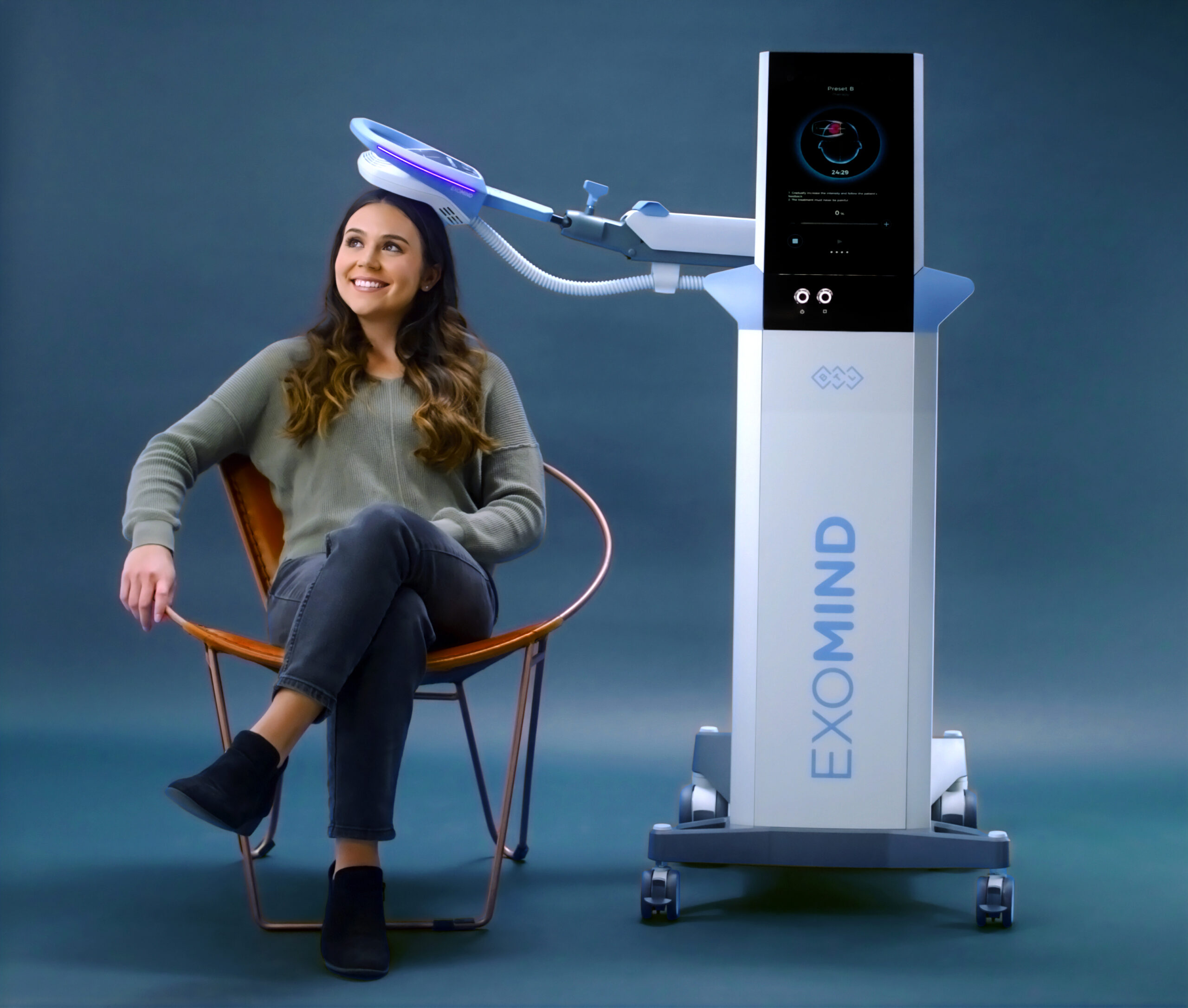
Comfortable outpatient EXOMIND™ treatment








What would you like help with?
You do not need to know which treatment you need before reaching out. Tell us what has changed and what you hope to regain.
Depression
When low mood, reduced interest or lack of motivation makes daily life feel heavy. rTMS is an established option for major depressive disorder; suitability and protocol require clinical review.
Read the research →OCD
TMS has clinical applications for obsessive-compulsive disorder.
Read the research →Anxiety & persistent stress
When worry follows you home, your body stays tense, or your mind will not settle. We explore psychological care and whether rTMS belongs in your plan; evidence varies by presentation and protocol.
Read the research →Binge eating & control difficulties
Emerging brain-stimulation research is exploring eating-related symptoms, cravings and self-regulation.
Read the research →ADHD & executive function
When staying organized, sustaining attention or finishing tasks takes more effort than people see. We connect assessment and practical support with treatment planning. rTMS for ADHD remains an emerging application.
Read the research →Brain fog & cognitive fatigue
When you lose your train of thought, feel mentally slower or finish the day depleted. We consider sleep, mood, health and other possible contributors before recommending care.
Perimenopause & menopause
When changes in mood, concentration or sleep leave you feeling unlike yourself. We explore your concerns and coordinate care when appropriate. rTMS is not a hormone treatment; evidence for menopause-specific cognitive benefits is emerging.
PTSD & trauma-related symptoms
When difficult experiences keep affecting sleep, relationships or your sense of safety. We explore trauma-informed care and discuss the developing evidence for rTMS as a possible adjunct.
Read the research →Brain optimization
When you want to understand your cognitive strengths, protect time for recovery and work toward sustainable focus. We build goals around daily functioning; enhanced memory, processing speed or peak performance cannot be promised.
The evidence for rTMS differs across conditions and protocols. A treatment option for depression does not establish effectiveness for ADHD, PTSD, anxiety, menopause-related brain fog or performance enhancement. We will explain what is known and what remains uncertain for your goals.
Veterans & First Responders:
Your wellbeing deserves care, too.
You have been there for others. You deserve room to recover.
You may be used to functioning under pressure. That does not mean you have had enough room to recover.
Repeated exposure to critical incidents, demanding shifts and sustained responsibility can leave you feeling on edge, emotionally distant or mentally exhausted. You may notice changes in sleep, concentration, mood or relationships even while continuing to do your job.
Talk about persistent alertness, intrusive memories, irritability or difficulty feeling settled.
Explore brain fog, cognitive fatigue, attention difficulties and burnout in the context of your work and health.
We consider trauma-informed psychological support and whether rTMS may fit a broader care plan. Evidence for PTSD applications is developing.
We explain confidentiality and its limits, explore your goals, and coordinate with existing providers when appropriate and with your consent. We can discuss coverage questions; eligibility for Veterans Affairs or employer-funded benefits requires confirmation.
Book a Free 15-Minute ConsultationSupport for the life you want to get back to
For veterans, police, firefighters, paramedics, correctional officers and frontline healthcare workers. Explore support for low mood, trauma-related symptoms and cognitive fatigue.
Explore care for veterans & first responders →When focus, memory or mental energy feel different, start with understanding what is contributing—and which treatment options fit.
Explore brain fog & menopause support →Beyond Symptoms™
Care focused on the life you want to reclaim.
Symptoms matter because of what they take from your life: connection, confidence, energy, rest and the ability to feel present. Our approach connects clinical understanding with practical goals and continuing care.
Understand
Feel heard. We consider your experiences, strengths, health, sleep and treatment history together.
Choose
Gain clarity. We explain appropriate options, expected benefits, limitations and costs so you can make an informed decision.
Move forward
Build a usable plan. We track goals that matter in everyday life and review the next steps with you.
Five commitments that guide your care
Listen beyond the symptoms
Begin with what life feels like and what you hope will change.
Understand the whole picture
Consider clinical, cognitive, sleep, health and contextual factors.
Choose care carefully
Review suitability, safety, evidence and alternatives together.
Work toward meaningful change
Connect care with personal goals for relationships, work and daily functioning.
Review and adapt
Monitor response and adjust recommendations rather than assuming every person needs the same pathway.
No surgery or anesthesia. Treatment is delivered while you are awake and seated comfortably.
Magnetic pulses are directed toward selected brain networks involved in mood and cognitive control.
EXOMIND is delivered as an outpatient treatment with no routine recovery period after sessions.
Your treatment pathway is considered in the context of your goals, history and broader clinical presentation.
You may be coping. That does not mean you are feeling well.
What would feeling better make possible?
We begin with the changes that matter to you. These are personal goals for care; the treatment plan and outcomes are individual.
Having more room for family, relationships and the things that bring meaning to your day.
Working toward less overwhelm when concentrating, organizing your day or following through.
Making space for rest, interests and connection instead of using everything just to get through.
What is rTMS—and where does EXOMIND fit?
rTMS means repetitive transcranial magnetic stimulation. It uses repeated magnetic pulses to stimulate selected areas of the brain. EXOMIND™ is the platform we use to deliver this treatment.
EXOMIND uses a coil placed against the scalp to deliver repeated magnetic pulses. These pulses pass through the skull and induce small electrical currents that stimulate nerve cells in a selected brain region.
For depression, rTMS commonly targets the prefrontal cortex—a region involved in mood regulation and cognitive control. The aim is to influence activity in this region and its connected networks. Repeated stimulation may support changes in how these networks function over a course of treatment.
What matters to you is how life feels outside the treatment room: being more present with family, finding everyday tasks less overwhelming, or having more capacity to engage in therapy. We track your symptoms and personal goals rather than assuming that brain stimulation will improve every aspect of cognition.
You remain awake throughout treatment. No surgery or anesthesia is required. You may feel tapping at the scalp; discomfort and headaches can occur. Suitability, the treatment schedule and any maintenance needs are discussed individually.
Learn about the mechanism: NIMH rTMS overview · EXOMIND manufacturer information.
More than a device. A clinically integrated treatment pathway.
Clinical neuropsychology perspective
Care is informed by brain-behaviour relationships and the person’s broader clinical presentation.
Integrated treatment options
EXOMIND can be coordinated with psychotherapy, psychological assessment, qEEG brain mapping, neurofeedback and behavioural strategies when appropriate.
Individualized decision-making
We focus on clinical fit, meaningful goals, safety and the treatment plan that makes sense for the individual.
Understand the evidence before deciding
We distinguish the broader rTMS research from studies of the specific device and protocol. Results depend on the condition, treatment plan and individual response.
EXOMIND-specific evidence
Across early studies, ExoTMS was generally well tolerated, with encouraging patient-reported outcomes.
Read the 2026 evidence review →Broader rTMS evidence
rTMS has a larger research base for conditions such as major depressive disorder and obsessive-compulsive disorder.
Depression evidence →OCD evidence →
Individual outcomes vary. Suitability depends on clinical history, goals and treatment protocol.
See what EXOMIND treatment can feel like
A patient perspective can make the treatment process easier to picture before your first consultation.
Patient experiences are individual and do not predict a specific outcome.
From first question to treatment plan
Free consultation
Discuss your goals, symptoms, treatment history and questions without committing to treatment.
Personalized treatment plan
If EXOMIND appears appropriate, we review the clinical plan, expected schedule and how it may fit with other care.
Comfortable outpatient sessions
Treatment is non-invasive and generally requires no routine downtime afterward.
Simple pricing. More treatment value.
One clear session price with a package that adds two sessions at no additional charge.
Ways to make treatment more manageable
Book a Free 15-Minute rTMS Consultation
Insurance reimbursement is not guaranteed. Beautifi financing is provided by a third party and is subject to approval and applicable terms.
Dr. Courtney Dookie
Clinical Neuropsychologist
Dr. Courtney Dookie, PsyD, is a Clinical Neuropsychologist and Registered Psychologist with declared competence in clinical psychology and neuropsychology. His work includes neuropsychological and psychoeducational assessment, ADHD evaluation, mood and anxiety disorders, trauma-related concerns and brain-based interventions.
At Calgary Mind & Wellness Clinic, EXOMIND is integrated with the clinic’s broader psychological and brain-health services.

Coordinated care that supports your therapeutic relationship.
Psychologists, counsellors, physicians and other clinicians can refer for a suitability discussion while continuing to provide the client’s ongoing care. We review the referral question, explain the proposed pathway and coordinate relevant progress information with appropriate client consent.
Read the professional referral guide →You do not have to keep carrying this alone.
Start with a free 15-minute conversation about what you have been experiencing, what you want to change and whether rTMS or another care pathway may fit.
Calgary clinic: 301 14 Street NW, Suite 302A, Calgary, AB T2N 1Z7 · 780-978-9010
Book a Free 15-Minute rTMS ConsultationNo treatment commitment is required.Frequently Asked Questions
What is TMS technology?
Transcranial magnetic stimulation uses targeted magnetic pulses to stimulate nerve cells in specific brain regions. EXOMIND uses BTL’s ExoTMS™ technology.
What does rTMS feel like, and are there side effects?
You may feel tapping or discomfort at the stimulation site. Temporary headache or scalp discomfort can occur. Seizure is a rare but serious risk of TMS. We review risks, medical history, implants and other safety considerations before treatment.
How many treatments are needed?
The appropriate frequency and duration are individualized according to the treatment plan and response.
Who may be suitable for rTMS?
Suitability depends on clinical history, treatment goals and safety screening. The free consultation is the starting point.
Can EXOMIND be combined with therapy or neurofeedback?
Yes, when clinically appropriate, EXOMIND can be integrated with psychotherapy, psychological assessment, qEEG brain mapping, neurofeedback and behavioural strategies.
Learn more when you are ready
These detailed guides support informed decision-making without interrupting the main treatment journey above.
Learn more about EXOMIND & rTMS
Explore focused guides on treatment indications, patient experience, brain-based treatment options, and practical planning.