
Clinician-Guided Neurofeedback in Calgary
Personalized care. Practical goals. Progress reviewed.
EEG-based training for children, teens and adults seeking support with attention, self-regulation, sleep, stress or cognitive performance. Every plan is considered alongside your clinical history, goals and current care.
qEEG can inform clinical planning, but it does not diagnose a condition on its own.
Explore fit, evidence and next steps before deciding whether to book an assessment.
- Clinician-guided
- qEEG when indicated
- In-person Calgary care








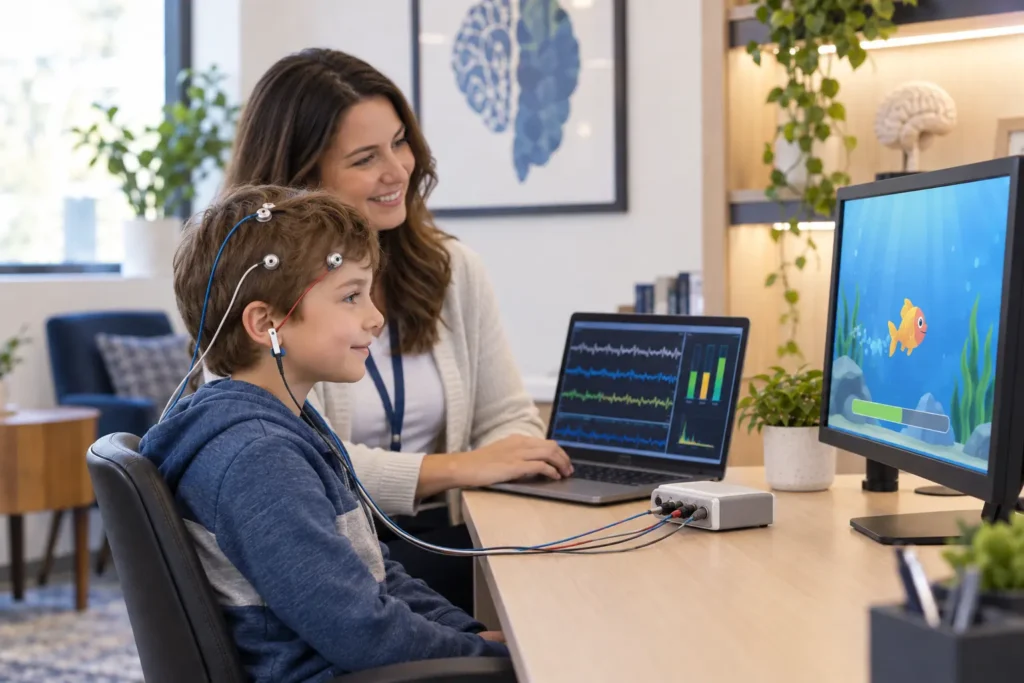
Could Neurofeedback Fit Your Goals?
We work with children, teens and adults. A consultation helps clarify whether neurofeedback is a reasonable option for concerns involving attention, self-regulation, stress, sleep or cognitive stamina.
Children & Teens
Developmentally informed care tied to everyday goals at home, at school and in relationships.
Explore child neurofeedback →Adults
A structured option for clearly defined goals involving attention, self-regulation or cognitive performance.
Explore adult neurofeedback →Attention & Focus
Learn what the evidence says, what progress may look like and how neurofeedback may complement ADHD care.
Explore ADHD neurofeedback →qEEG Brain Mapping
Understand when quantitative EEG information may add useful clinical context—and when it may not.
Explore qEEG brain mapping →What Is Neurofeedback and How Does It Work?
Neurofeedback is a form of EEG biofeedback. Sensors placed on the scalp record brain activity; they do not send electricity into the brain.
Software provides immediate visual or auditory feedback linked to selected EEG patterns. Across repeated sessions, clients practise attention and self-regulation skills while progress is reviewed against meaningful functional goals.
- Comfortable scalp sensors record EEG activity.
- On-screen or auditory feedback responds in real time.
- Training is reviewed and adjusted against agreed goals.
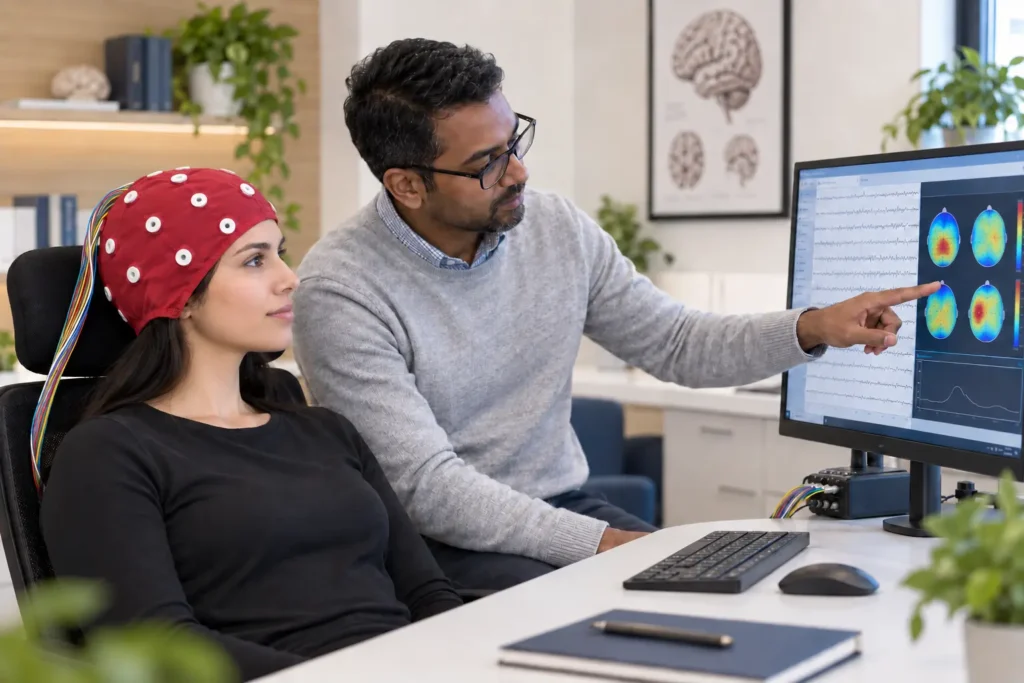
What Is qEEG Brain Mapping?
An EEG records electrical activity from the scalp. qEEG is a quantitative analysis of that recording.
When clinically indicated, findings are considered alongside symptoms, developmental and medical history, medications, sleep and assessment information. qEEG is not a stand-alone diagnosis, brain scan or replacement for medical EEG or neurological evaluation.
A Clear, Clinician-Guided Process
Know what happens at each stage, why it matters and how progress will be reviewed.
Free Consultation
A focused 15-minute conversation to clarify your main concern, goals and questions.
Intake & Clinical Planning
Relevant history, current care, medications, sleep and functional priorities are reviewed.
qEEG, When Indicated
EEG information may be collected and interpreted alongside the broader clinical picture.
Training & Review
Progress is reviewed against agreed functional goals so the plan can be adjusted or discontinued.
Meet Your Neurofeedback Team
Care is considered within the broader clinical picture, with provider roles stated clearly.

Dr. Courtney Dookie, PsyD
Declared competence in Clinical Psychology and Neuropsychology. Dr. Dookie considers qEEG and neurofeedback information alongside clinical history, assessment findings and the client’s functional goals.

Dr. Sania Dookie
Provides mental-health care for adults and children experiencing anxiety, depression, trauma, stress, relationship concerns and life transitions as part of the clinic’s broader care pathways.

Rebeccah Alai
Supports EEG recordings and neurofeedback sessions within the clinic’s clinician-guided model.
Neurofeedback Research and Evidence
Research findings differ by condition, protocol and outcome measure. We discuss both potential benefits and important limitations.
ADHD & Attention
Some reviews report improvement, while findings are more cautious in blinded studies. Neurofeedback should complement comprehensive assessment and guideline-supported care.
Read the ADHD evidence review →PTSD & Trauma
Early research suggests possible benefit for some trauma-related symptoms, but evidence remains limited and heterogeneous. It is considered adjunctive to established trauma care.
Read the PTSD evidence review →Depression
Evidence remains exploratory. Neurofeedback is not an established first-line treatment and should not replace indicated psychotherapy, medication or medical care.
Read the depression evidence review →Sleep & Insomnia
Research is mixed and outcomes vary. This review explains where neurofeedback may fit within a broader sleep-care plan.
Read the sleep evidence review →Concussion & Brain Injury
Evidence remains emerging. This review summarizes potential rehabilitation goals, uncertainties and the need for appropriate medical care.
Read the concussion evidence review →Explore the full clinical research library →
Declared competence in Clinical Psychology and Neuropsychology · Evidence last reviewed September 2026
Neurofeedback FAQs
Practical information to help you decide whether to book a consultation.
What is neurofeedback and how does it work?
Neurofeedback is EEG biofeedback. Scalp sensors record brain activity and software provides immediate visual or auditory feedback linked to selected EEG patterns. The sensors do not send electricity into the brain.
Is qEEG brain mapping the same as neurofeedback?
No. qEEG is a quantitative analysis of recorded scalp EEG activity. Neurofeedback is the training process that uses feedback during sessions.
Can qEEG diagnose ADHD, autism or another condition?
No. qEEG is not a stand-alone diagnostic test. Findings may inform clinical planning, but diagnosis requires an appropriate clinical assessment.
What happens at the first appointment?
We review your goals, relevant history, current supports and questions. We explain what neurofeedback and qEEG can and cannot answer, then recommend the most appropriate next step.
How many neurofeedback sessions will I need?
There is no universal number of sessions. Before treatment begins, we explain the proposed schedule and an initial review point. Functional outcomes are monitored so training can be adjusted, paused or discontinued when continuing is not clinically supported.
Should I stop medication before neurofeedback or qEEG?
Do not stop or change prescribed medication unless directed by your prescribing professional. Please tell us about medications and supplements so they can be considered during planning.
Does insurance cover neurofeedback or qEEG?
Coverage varies by insurer, plan and practitioner eligibility. Psychological services may be eligible for reimbursement, and direct billing may be available. Please verify your benefits; payment is not guaranteed.
Start with a clear, pressure-free conversation.
We’ll clarify your goals, explain the evidence and limitations, and help you decide whether neurofeedback, qEEG or another service is the most appropriate next step.
Existing client? Book your next neurofeedback session →Prefer that our clinic contact you?