
EXOMIND™ rTMS in Calgary for Depression, OCD and Brain Health
Targeted brain stimulation. Personalized clinical care. No routine downtime.
EXOMIND uses non-invasive transcranial magnetic stimulation to engage brain networks involved in mood, cognitive control and self-regulation. Treatment is delivered in a clinician-guided setting with individualized planning.
Book a Free 15-Minute EXOMIND ConsultationExplore fit and next steps without committing to treatment.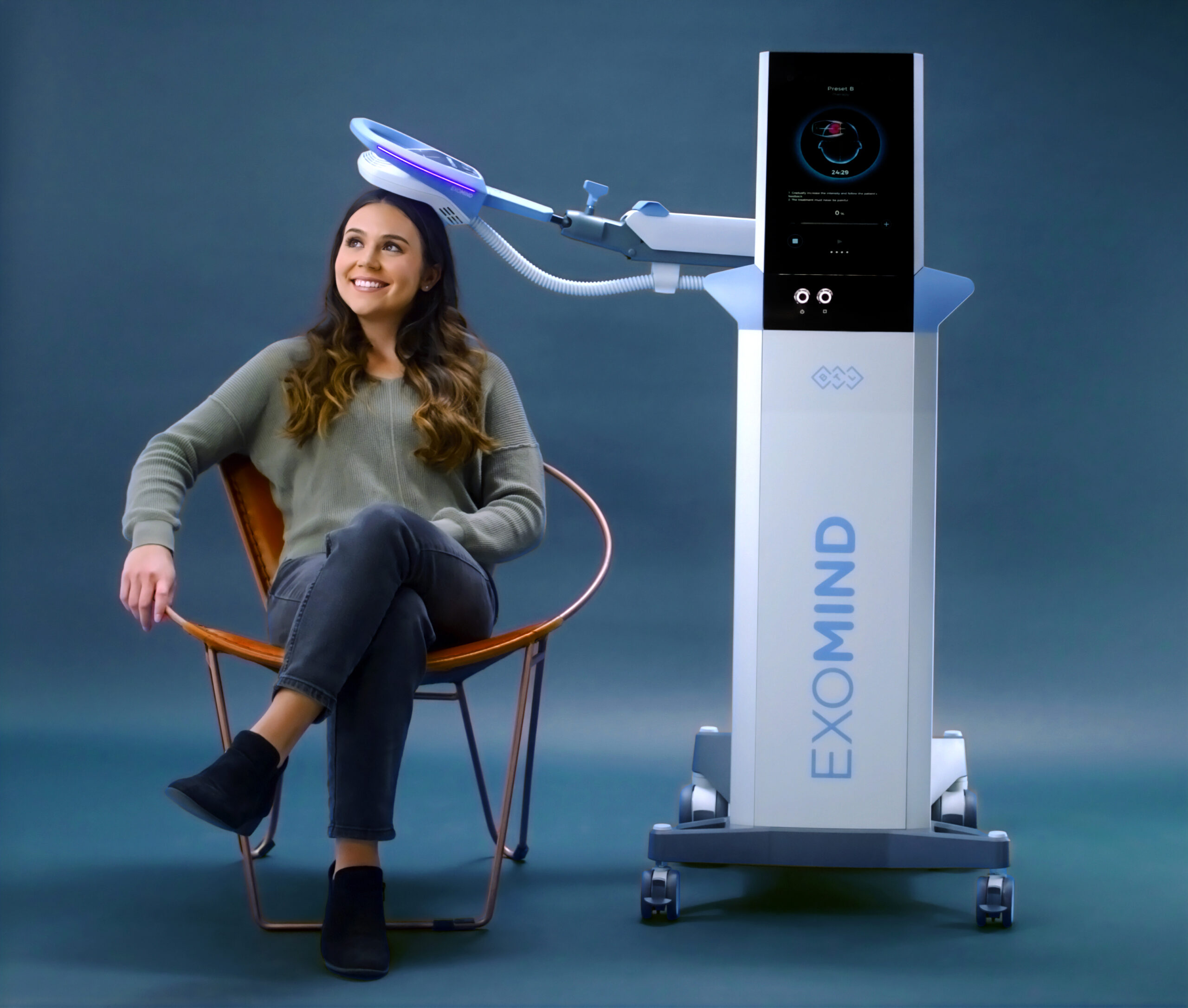
Comfortable outpatient EXOMIND™ treatment








No surgery or anesthesia. Treatment is delivered while you are awake and seated comfortably.
Magnetic pulses are directed toward selected brain networks involved in mood and cognitive control.
EXOMIND is delivered as an outpatient treatment with no routine recovery period after sessions.
Your treatment pathway is considered in the context of your goals, history and broader clinical presentation.
A useful next step when symptoms or cognitive demands are still getting in the way.
Designed around the brain systems that support everyday functioning
EXOMIND treatment planning focuses on meaningful clinical or brain-health goals rather than technology alone.
Support for concerns involving depression, emotional regulation and persistent mood symptoms.
Explore attention, executive-function demands, mental clarity and cognitive stamina within an individualized plan.
Discuss recovery from burnout, mental fatigue, reduced drive and broader brain-health goals.
What makes EXOMIND different?
EXOMIND is a non-invasive TMS platform designed to stimulate selected brain networks using targeted magnetic pulses.
For appropriate clients, the appeal is straightforward: brain-focused treatment without surgery, anesthesia or a routine recovery period, delivered in a clinical setting and able to complement psychotherapy, assessment and other care when appropriate.
More than a device. A clinically integrated treatment pathway.
Clinical neuropsychology perspective
Care is informed by brain-behaviour relationships and the person’s broader clinical presentation.
Integrated treatment options
EXOMIND can be coordinated with psychotherapy, psychological assessment, qEEG brain mapping, neurofeedback and behavioural strategies when appropriate.
Individualized decision-making
We focus on clinical fit, meaningful goals, safety and the treatment plan that makes sense for the individual.
What can we discuss during an EXOMIND consultation?
Start with what you want to improve. We can then determine whether EXOMIND belongs in the treatment pathway.
Depression
TMS is an established non-invasive treatment option for major depressive disorder.
Read the research →OCD
TMS has clinical applications for obsessive-compulsive disorder.
Read the research →Anxiety & stress
Brain-focused treatment may be considered within an individualized plan for anxiety and stress-regulation concerns.
Read the research →Binge eating & control difficulties
Emerging brain-stimulation research is exploring eating-related symptoms, cravings and self-regulation.
Read the research →Focus & executive function
Consultation can explore attention, focus and executive-function goals and the treatment options that may fit.
Read the research →Burnout & brain fog
A brain-health consultation can explore cognitive fatigue, resilience, mental clarity and recovery goals.
Perimenopause & postpartum concerns
We can discuss mood and cognitive concerns occurring during major hormonal transitions and available treatment pathways.
Trauma-related symptoms
Brain-focused treatment can be considered within a broader trauma-informed treatment plan.
Read the research →Brain optimization
A wellness pathway may focus on resilience, performance, cognitive stamina and proactive brain health.
What current EXOMIND studies have reported
Early peer-reviewed findings are encouraging and provide useful context for treatment discussions.
EXOMIND-specific evidence
Across early studies, ExoTMS was generally well tolerated, with encouraging patient-reported outcomes.
Read the 2026 evidence review →Broader rTMS evidence
rTMS has a larger research base for conditions such as major depressive disorder and obsessive-compulsive disorder.
Depression evidence →OCD evidence →
Individual outcomes vary. Suitability depends on clinical history, goals and treatment protocol.
See what EXOMIND treatment can feel like
A patient perspective can make the treatment process easier to picture before your first consultation.
Patient experiences are individual and do not predict a specific outcome.
From first question to treatment plan
Free consultation
Discuss your goals, symptoms, treatment history and questions without committing to treatment.
Personalized treatment plan
If EXOMIND appears appropriate, we review the clinical plan, expected schedule and how it may fit with other care.
Comfortable outpatient sessions
Treatment is non-invasive and generally requires no routine downtime afterward.
Simple pricing. More treatment value.
One clear session price with a package that adds two sessions at no additional charge.
Ways to make treatment more manageable
Book a Free 15-Minute EXOMIND Consultation
Insurance reimbursement is not guaranteed. Beautifi financing is provided by a third party and is subject to approval and applicable terms.
About Dr. Courtney Dookie
Dr. Courtney Dookie, PsyD, is a Registered Psychologist with declared competence in clinical psychology and neuropsychology. His work includes neuropsychological and psychoeducational assessment, ADHD evaluation, mood and anxiety disorders, trauma-related concerns and brain-based interventions.
At Calgary Mind & Wellness Clinic, EXOMIND is integrated with the clinic’s broader psychological and brain-health services.

Take the first step toward a more personalized brain-health plan.
Start with a free 15-minute consultation. We’ll discuss your concerns, answer questions and outline the next step if EXOMIND appears appropriate.
Calgary clinic: 301 14 Street NW, Suite 302A, Calgary, AB T2N 1Z7 · 780-978-9010
Book a Free 15-Minute EXOMIND ConsultationNo treatment commitment is required.Frequently Asked Questions
What is TMS technology?
Transcranial magnetic stimulation uses targeted magnetic pulses to stimulate nerve cells in specific brain regions. EXOMIND uses BTL’s ExoTMS™ technology.
Is EXOMIND treatment painful?
Most clients describe treatment as tolerable. Sensation and tolerability vary by person.
How many treatments are needed?
The appropriate frequency and duration are individualized according to the treatment plan and response.
Who is EXOMIND suitable for?
Suitability depends on clinical history, treatment goals and safety screening. The free consultation is the starting point.
Can EXOMIND be combined with therapy or neurofeedback?
Yes, when clinically appropriate, EXOMIND can be integrated with psychotherapy, psychological assessment, qEEG brain mapping, neurofeedback and behavioural strategies.
Learn more when you are ready
These detailed guides support informed decision-making without interrupting the main treatment journey above.
Learn more about EXOMIND & rTMS
Explore focused guides on treatment indications, patient experience, brain-based treatment options, and practical planning.